The first type of Lithuanian trojaks!
A very rare and typologically sought-after issue.
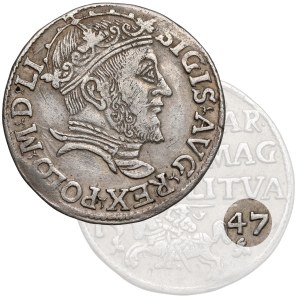
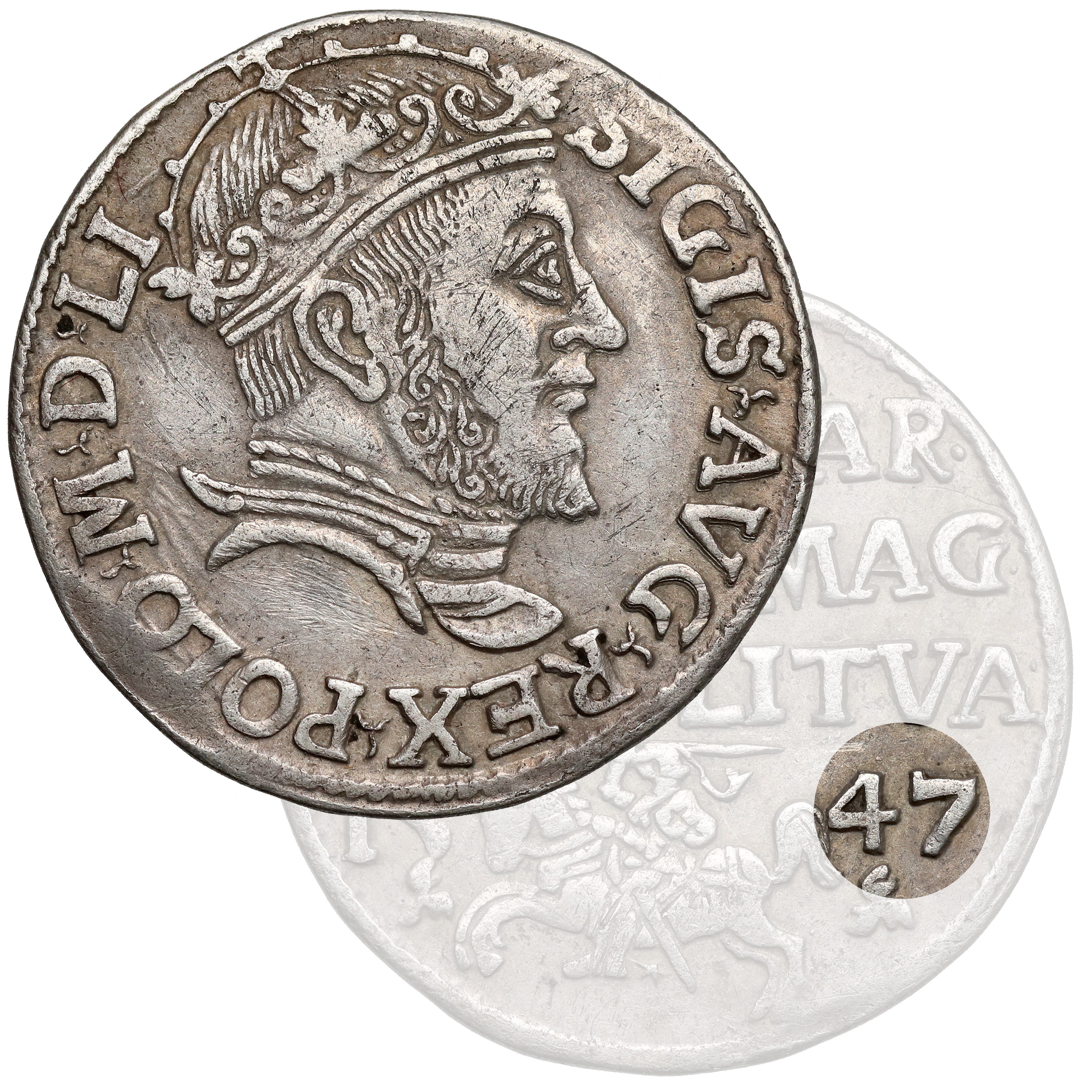
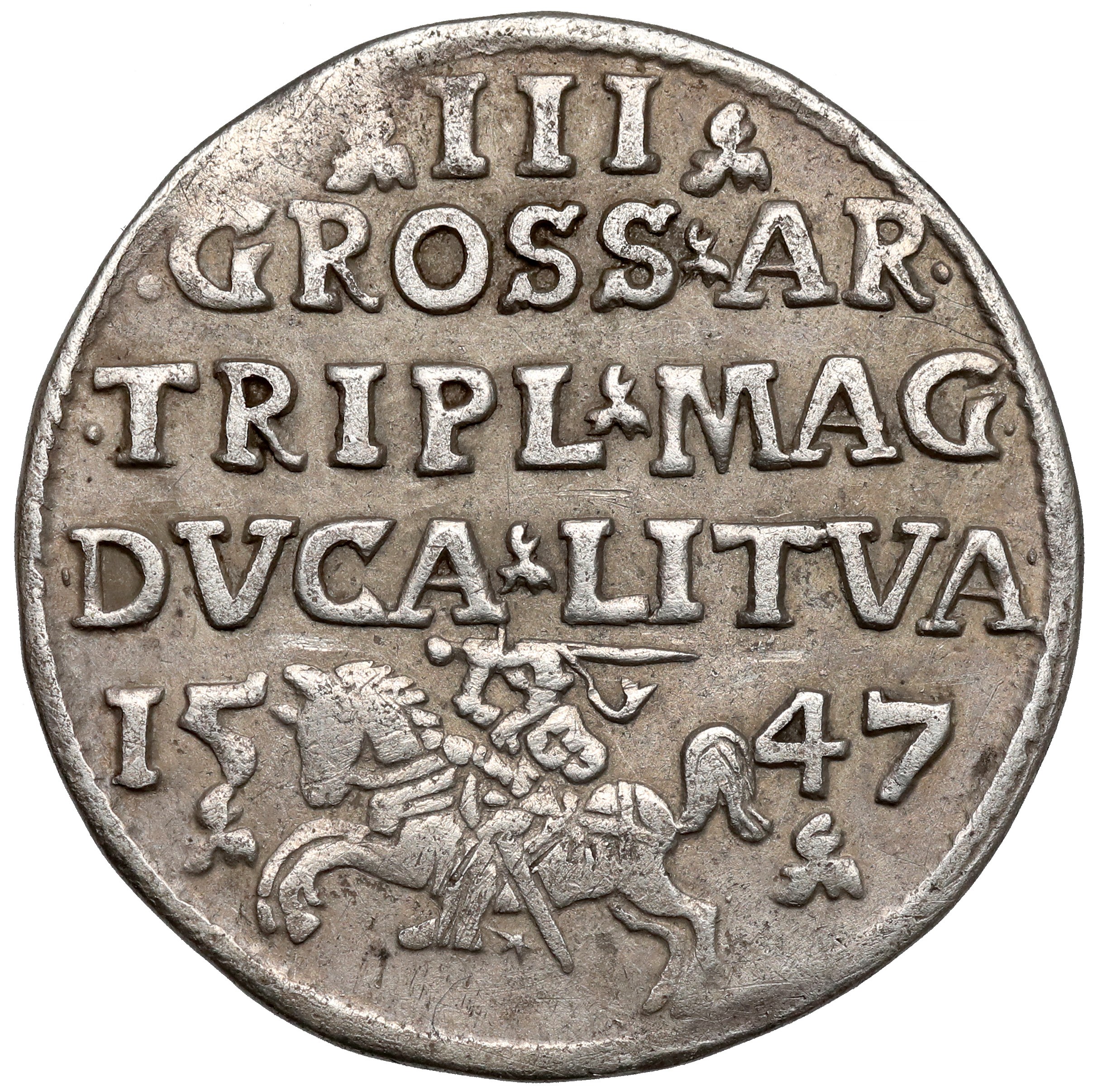
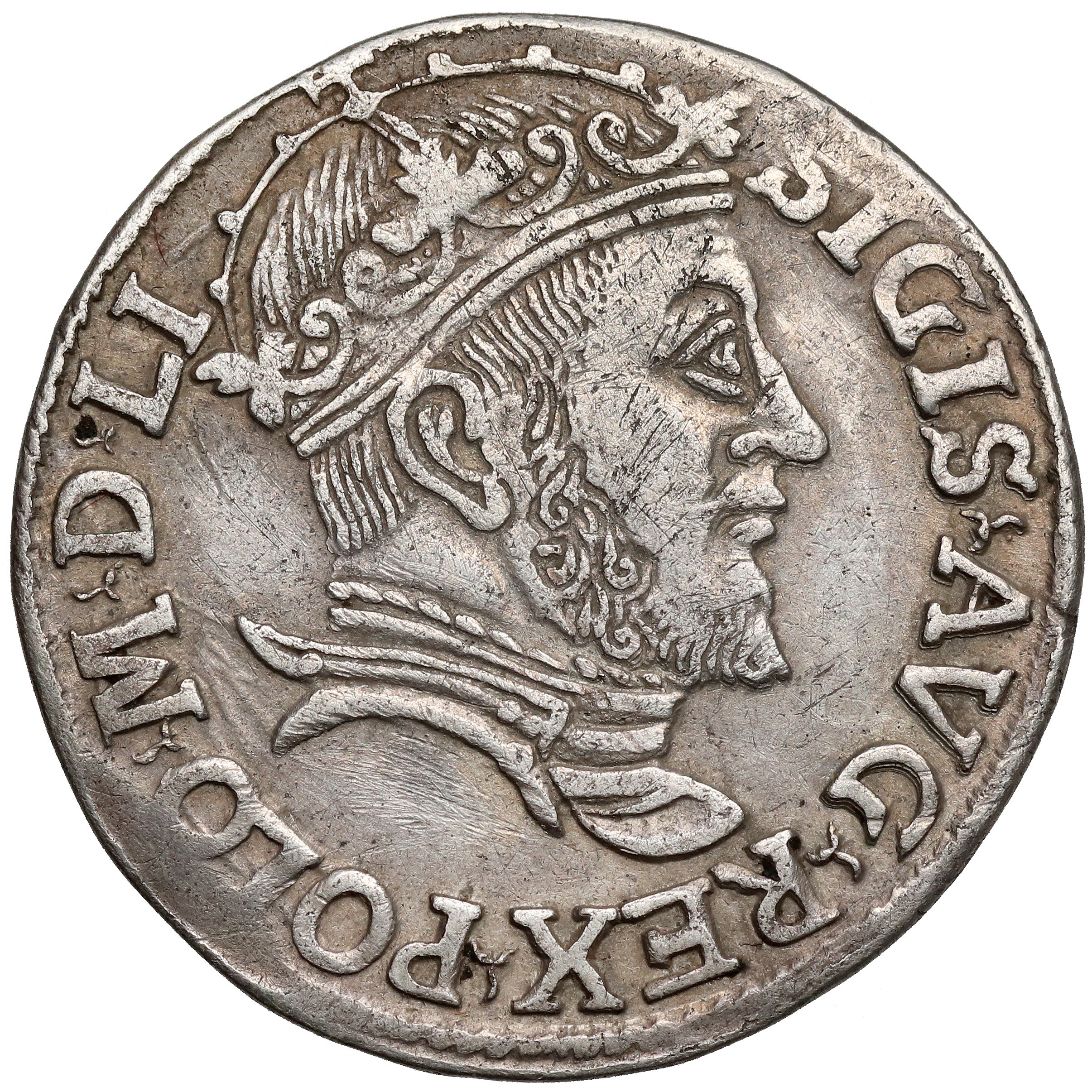
Although the first three-grosz coins in the Polish-Lithuanian Commonwealth were minted during the reign of Sigismund the Old, their issuance in Lithuania took place after he assumed independent rule there. It was at the Vilnius mint, reactivated by Sigismund Augustus, that the first Lithuanian trojaks were struck in 1546—a large coin by the standards of the time, equal to three Polish groszy. It was likely a small issue, lasting only two years, modeled after his father’s Gdańsk trojaks. The obverse featured a royal portrait surrounded by a title, while the reverse bore the denomination and date separated by the coat of arms of Lithuania.
This issue was discontinued as early as 1547, replaced by half-groszy and denars, the minting of which yielded greater profits for the mint’s administrators. It took about 15 years for the next series of Vilnius trojaks to appear; however, these were numismatic pieces with a different iconography, struck on a much larger scale. This is well illustrated by our archive, where for every 2 trojaks from 1547, there are nearly 100 trojaks from 1562!
An attractive detail: a gray, matte patina. Slight under-strike at the SIG and POLO marks. A sound, resonant coin.
Auction prices over the years have been few but at high levels.
From the 8th Marciniak auction (2019).
Silver, diameter 21 mm, weight 2.58 g.