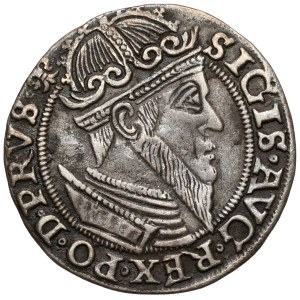
The reign of Sigismund II Augustus marked a period of prosperity for the Vilnius Mint. Shortly after the death of Sigismund the Old, the Sejm passed a resolution to close the mints in the Crown and Prussia, a move opposed by, among others, Duke Albrecht and the city of Gdańsk. As Marian Gumowski notes in *The Gdańsk Mint *, “under the pretext of a shortage of small change and obligations toward the staff, it began minting denars, szelągs, and ducats as early as 1549.” In the following years, following further requests, the city began issuing groszy and, judging by the number of pieces preserved to this day, a small issue of trojaki.
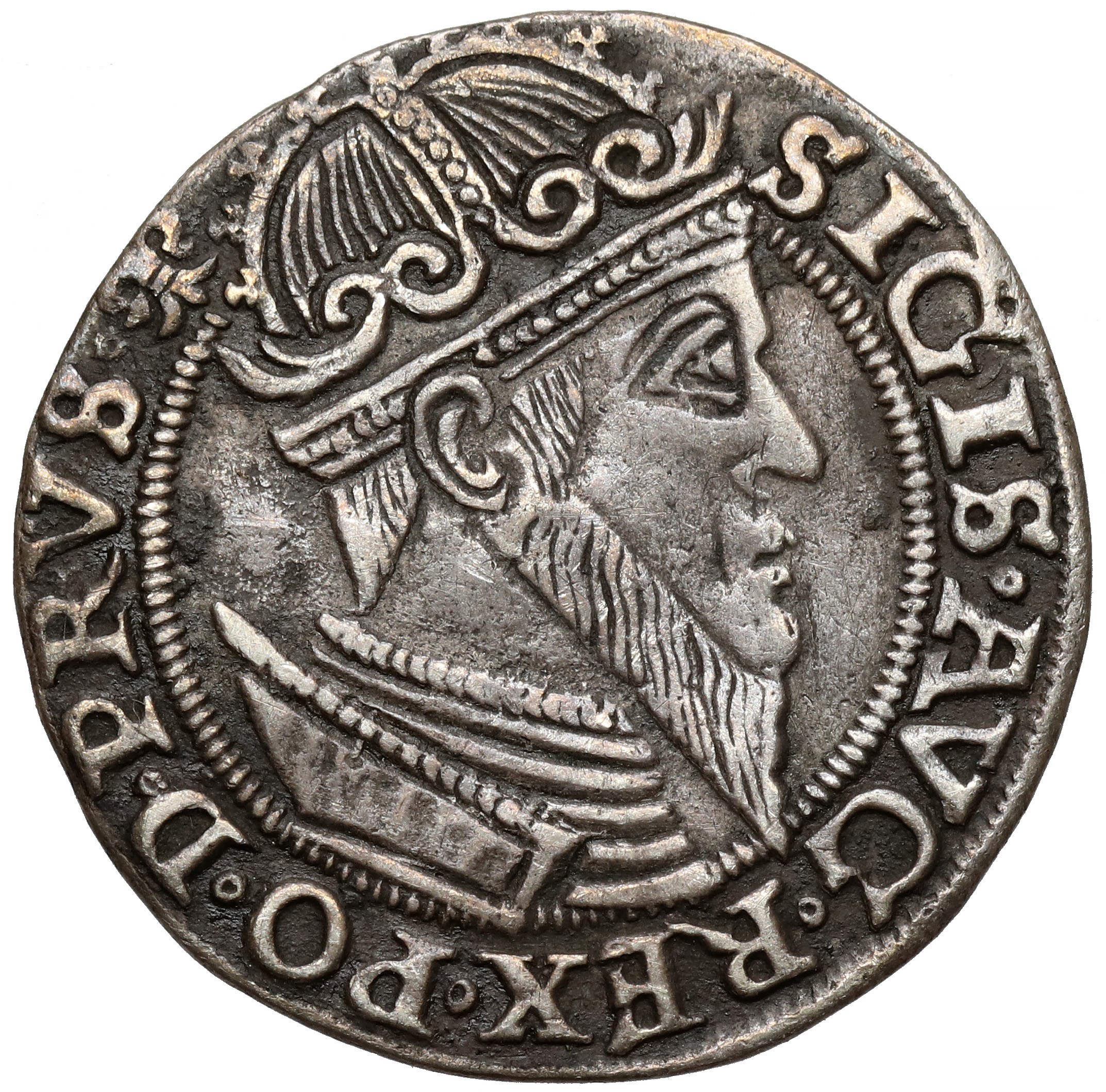
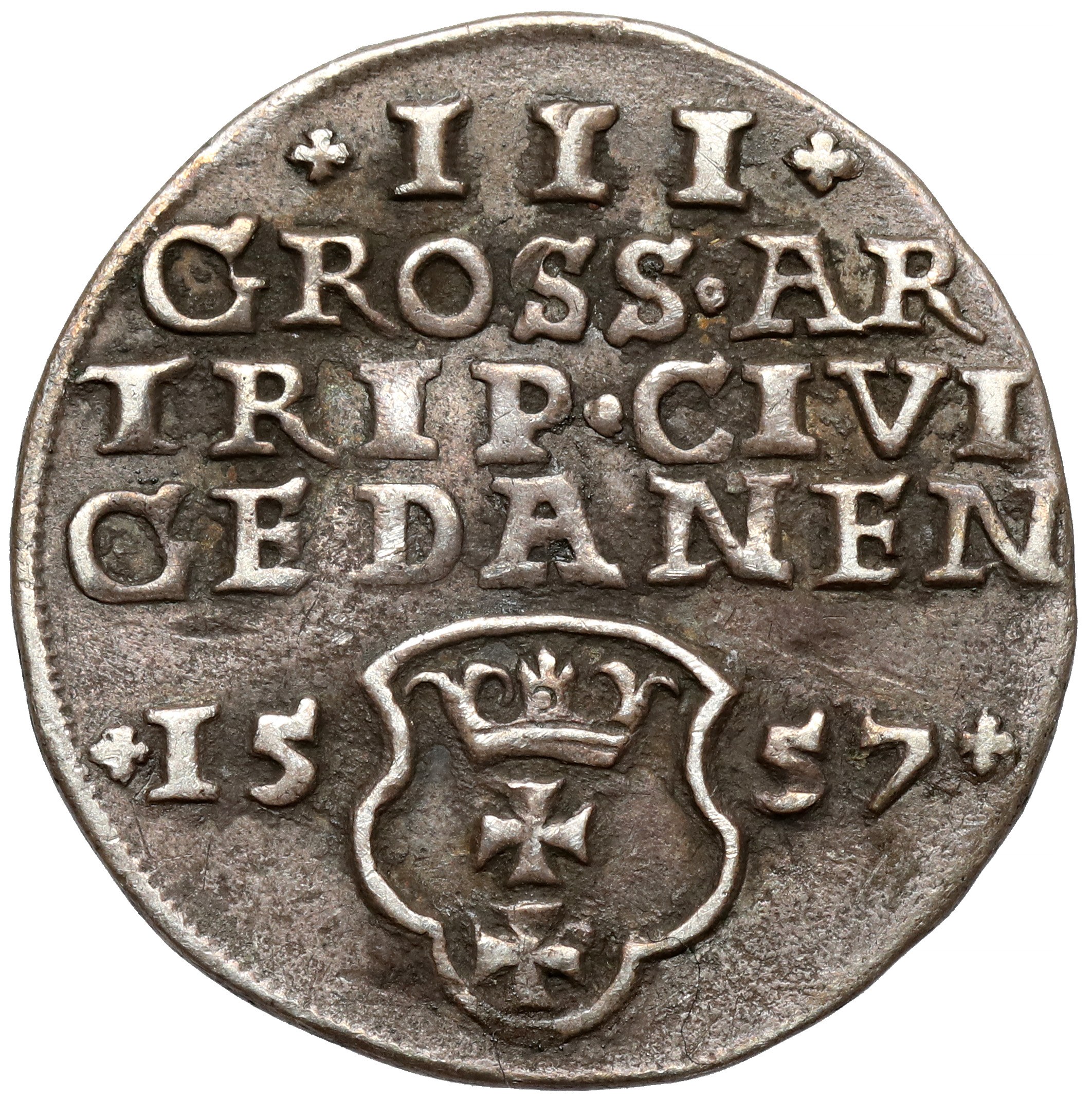
This specimen is a very rare first type of these coins.
It is distinguished not only by the presence of a border on the obverse but also by a different style of the royal portrait. It is much more schematic and simplified, as can be seen when compared to the portrait of the second type, by which it was likely quickly replaced.
And although Iger valued the “beaded” trojaks more highly, he did not reflect the actual disparity in their rarity. This disparity is clearly evident in our archive, where, out of 24 trojaks from the first year of issue, only 1 ( in poor, fourth-grade condition) was of this variety.
Ex. Emporium (December 1991).
A coin from the outstanding contemporary Zbiór.com collection, illustrated on its website.