A striking 17th-century medal by one of Poland’s most outstanding medalists— Sebastian Dadler.
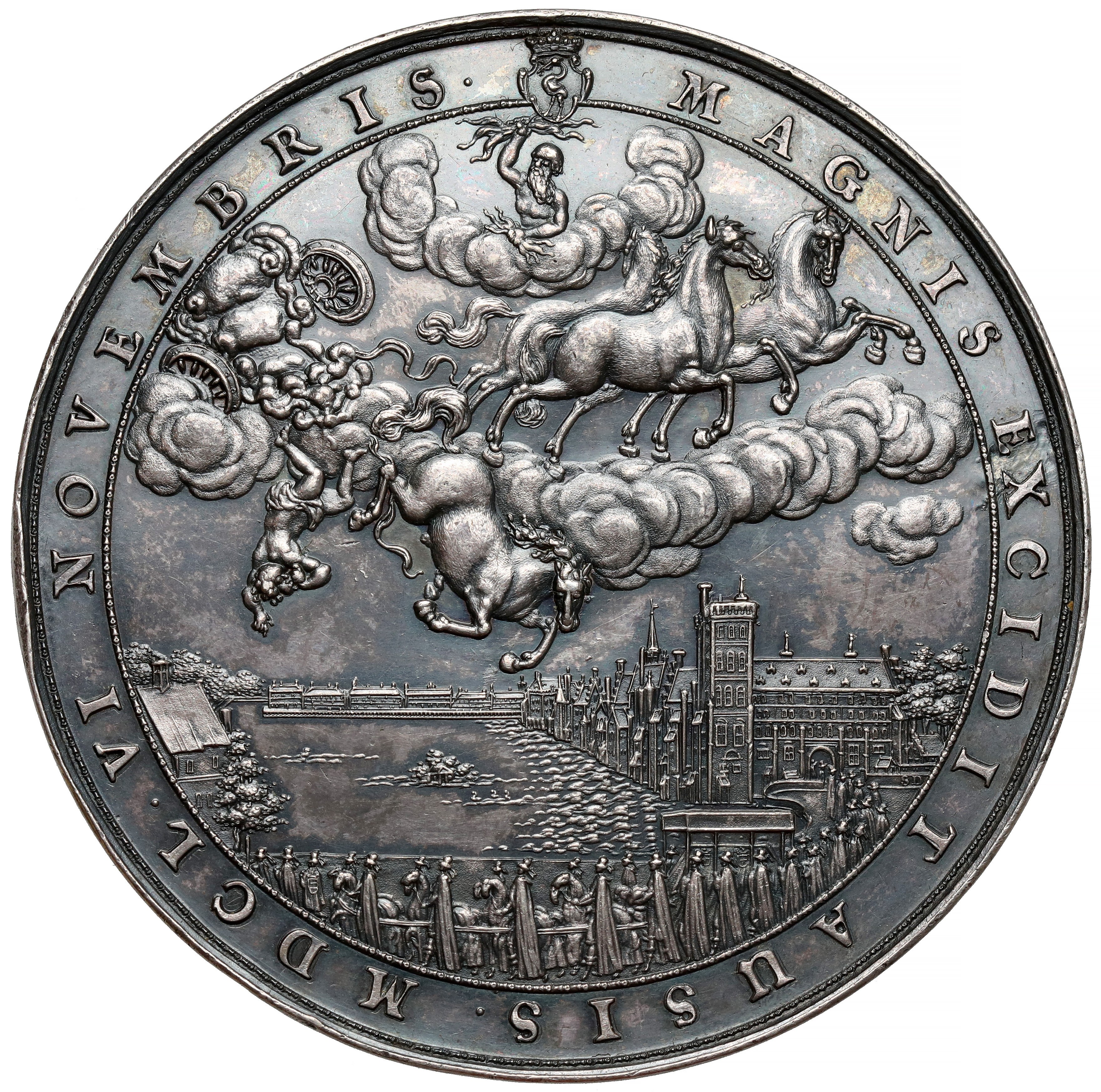
This work by the Gdańsk master was created for the court in the Netherlands to commemorate the death of William II of Orange, the Governor of the Netherlands, who went down in history for his failed coup attempt, to which the reverse of this medal alludes. As inscribed on its rim: MAGNIS EXCIDIT AUSIS MDCL VI NOVEMBRIS (He fell, having dared to do great things. November 6, 1650). This is a quote from Ovid, directly referring to the mythical scene unfolding in the clouds above the funeral procession passing by the castle in The Hague. There we see Jupiter casting the arrogant Phaeton (symbolizing William) from his chariot.
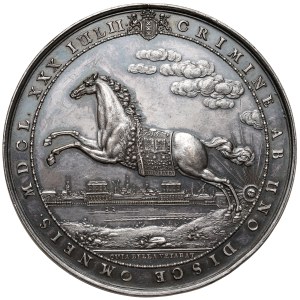
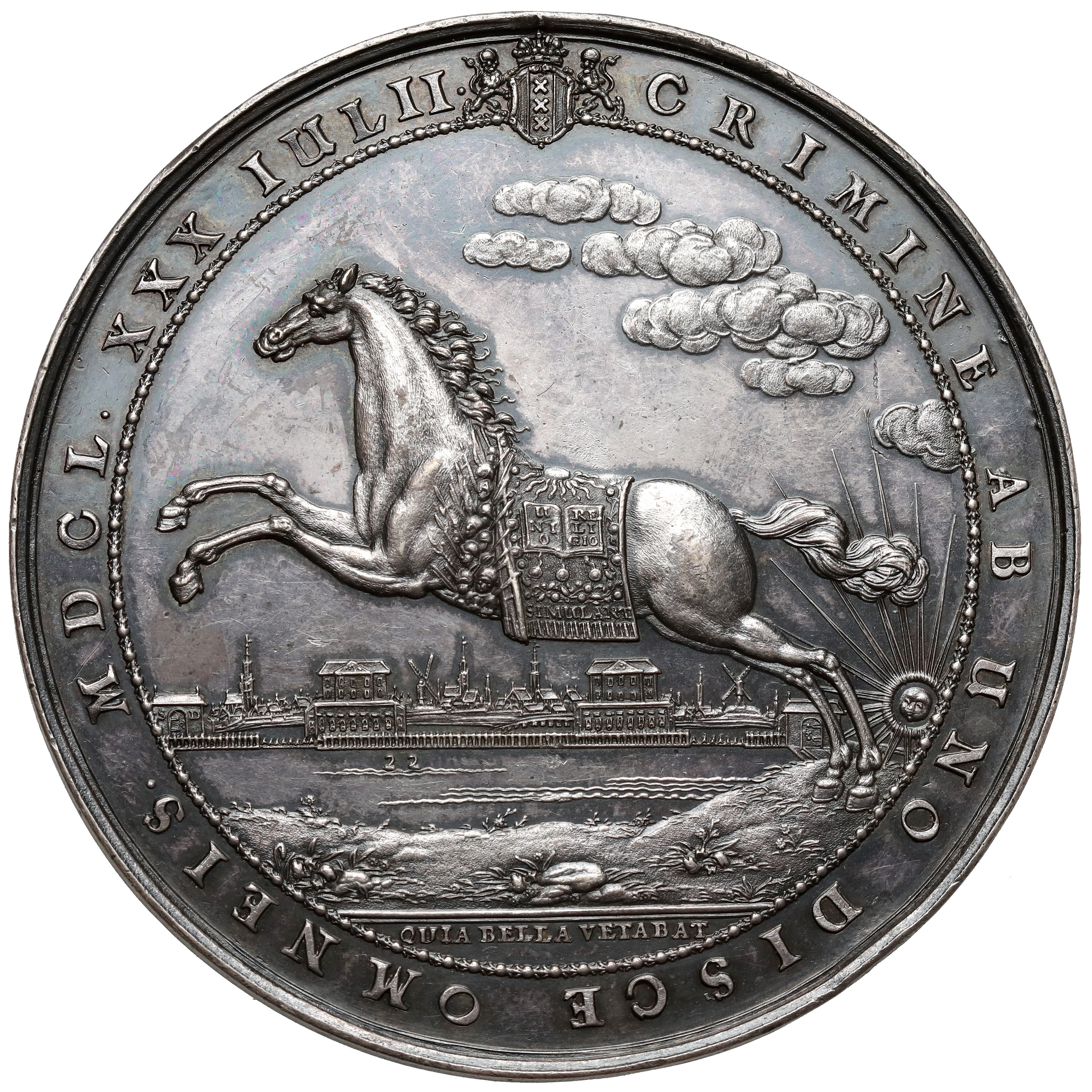
On the obverse, against the backdrop of a panorama of the city of Amsterdam, we see a horse galloping to the left. Embroidered on its decorative saddlecloth are a book and an inscription (according to Więcek: UNIONEM RELIGIONEMQE SIMULANT —They feign unity and religion). The inscription reads QUIA BELLA VETABAT (Because he opposed the war), and the rim bears the inscription: CRIMINE AB UNO DISCE OMNEIS. XXX IULII MDCL (Judge them all by this one crime. July 30, 1650).
In lovely condition. A single chip on the edge and slight wear on the background; otherwise, in perfect condition. Very nice
The SD mark at the base of the building, on the right side of the reverse.
A very rare piece.
Silver, diameter 69 mm, weight 91.59 g.